Tasarım Odaklı Düşünme (Design Thinking) çalıştaylarımızda mutlaka bir yapay zeka fikri filizlenir. Önceliklendirme aşamasında bu fikir diğerlerinin arasında sahnenin yıldızı gibi durur. "2000'li yıllarda olsaydık bu problemi nasıl çözerdik?" diye sorup alternatifler üzerine düşünmeye çalışsak da yapay zeka fikri gözümüzün önünde ışıl ışıl parlar. Hem çok mantıklı gelir hem de "wow" etkisi yaratacağı duygusunu uyandırır.
Ancak bir yapay zeka fikrini tasarlamak başlı başına ayrı bir yolculuktur. Kendi dinamikleri ve eleştirel gözle bakılması gereken yönleri vardır. "Hadi bu fikrin prototipini yapıp test edelim" demek, Google'ın eski Baş Karar Bilimcisi Cassie Kozyrkov'un benzetmesini hatırlatır: Bu, bir apartman dairesinde sevimli bir köpek yetiştirip sonra ondan koyun gütmesini ve sürüyü kurttan korumasını beklemeye benzer.
İşte tam bu noktada, net bir niyetle ve Tasarım Odaklı Düşünme yaklaşımıyla yapay zeka sistemi tasarlamanın ne anlama geldiğini ekiple birlikte keşfetmek kritik hale gelir.
Ekiplerde gözlemlediğim dört davranış
Çalıştaylarda bir yapay zeka fikri ortaya çıkıp tartışılmaya başladığında ekiplerde sık sık şu dört davranışı gözlemliyorum:
- Herkesin kullanabileceği ortak bir tanım yok.
- Kişiler hedefe ulaşmak için ekip olarak nasıl birlikte çalışacaklarını bilmiyor.
- Tasarım Odaklı Düşünme, yapay zeka tasarımıyla birleştirilemiyor; farklı açılardan bakma imkanı kayboluyor.
- İş, bir yazılım ya da BT projesi olarak görülüyor; teknik geçmişi olmayan kişiler geri planda kalmayı tercih ediyor.
Son madde, ilk üçünün de nedeni sayılabilir.
Tuval: iş birimleri ile teknik ekipler için ortak bir harita
İnsan Odaklı Yapay Zeka Tasarım Tuvali, iş birimleri ile teknik ekiplerin (yazılım, BT) birlikte ilerlemesini sağlayan bir haritadır. Niyet birlikte geliştirilir, plan birlikte yapılır, ekip hizalanarak birlikte hareket eder.
Odak noktası, ortaya çıkan yapay zeka çözümünün yapılabilir, gerçekçi ve çalışma bittikten sonraki gün hayata geçirilebilir olmasıdır. Tuval Black Mirror senaryoları ya da beş yıl sonrasının bilimkurgusu için değil; bugün elinizdeki imkanlarla neler inşa edebileceğiniz için tasarlandı.
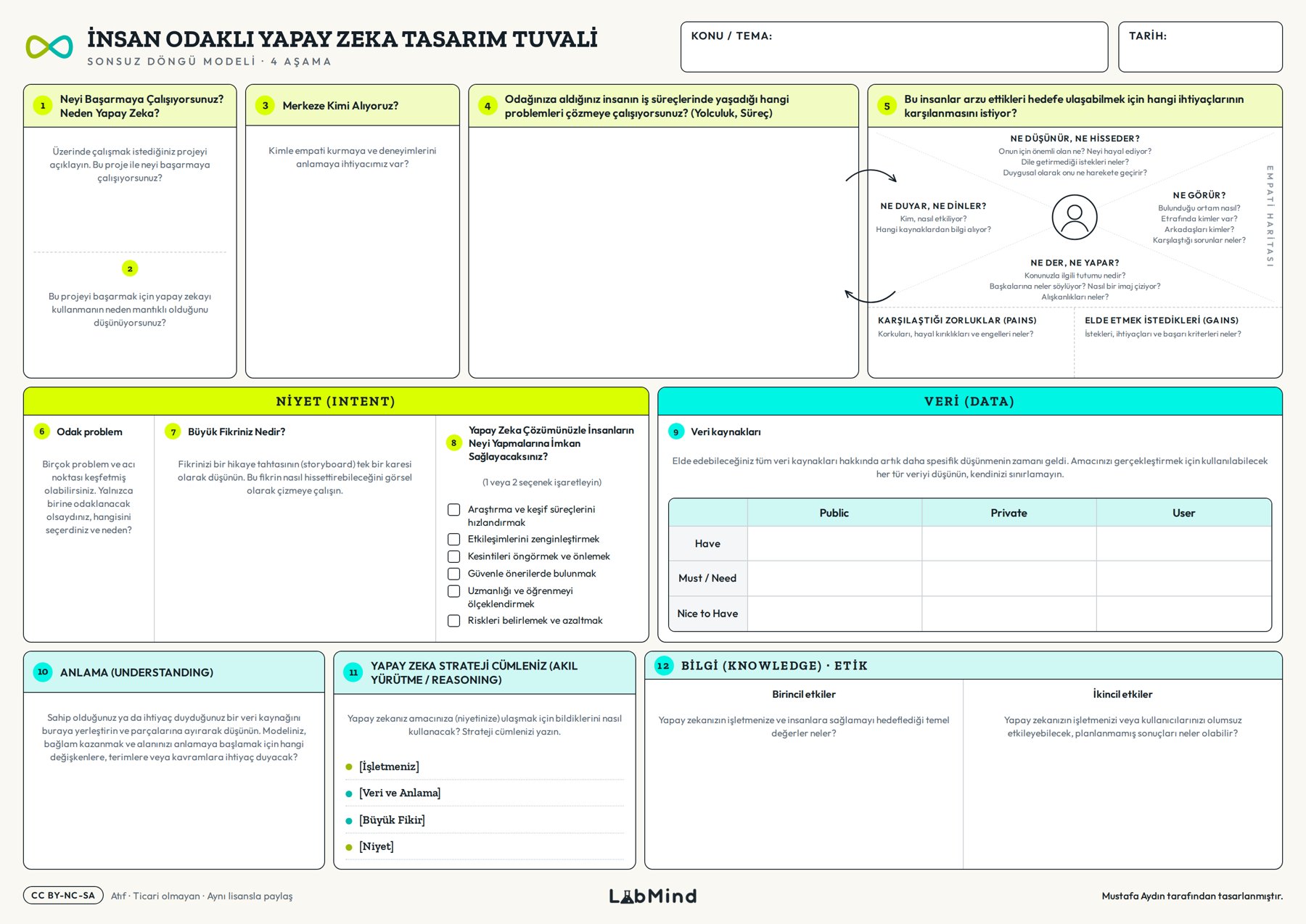
Tuval, Sonsuz Döngü Modeli'nin dört aşamasını 12 adımda dolaşır.
01İnsanı Anlamak
1. Neyi başarmaya çalışıyorsunuz?
Üzerinde çalışmak istediğiniz projeyi açıklayın. Tasarım Odaklı Düşünme çalışmasından çıkan fikri yeniden tartışmak ve tüm ekibin hemfikir olduğu ortak bir tanım yapmak için bu adım önemlidir.
2. Neden yapay zeka?
Bu projeyi başarmak için teknoloji kullanmak neden mantıklı? Bu soru, insanların ihtiyacı ile kurumun hedeflerinin gerçekten örtüşüp örtüşmediğini görmek için güçlü bir beyin fırtınasına dönüşür.
3. Merkeze kimi alıyoruz?
Herkes için her problemi çözemeyiz. İyi bir gözlemle, odağa aldığımız kişilerin davranışsal özellikleri tanımlanır.
Google Ventures ile Blue Bottle Coffee'nin ortak çalışmasında ekip, çekirdek kahve satacak bir web sitesi için önce şunu sordu: Merkeze kimi alıyoruz? Yanıt "kahve meraklıları" oldu. Peki kime kahve meraklısı diyeceğiz? Ekibin tanımı şuydu: "Evinde kahve için özel tartısı olan kişiler." (Jake Knapp, Sprint)
Davranışsal persona tanımlamak uzun ve zorlu bir süreçtir, ama projenin sağlıklı ilerlemesi için kritik önemdedir.
4. Süreç ve yolculuk
Odaktaki kişinin bugünkü sürecini adım adım izleyin. Hangi anlarda zorlanıyor, nerede takılıyor, nerede vazgeçiyor?
5. Empati haritası
Tasarım Odaklı Düşünme çalışmasından gelen empati çıktıları tuvale taşınır: Kişi ne düşünüyor, ne duyuyor, ne görüyor, ne yapıyor? Zorlukları ve kazanımları neler? İnsan için değer üretmeyen hiçbir ürün fikri yaşayamaz.
02Niyeti Netleştirmek
Amacı belirlemeden önce niyetin açık ve net olması gerekir. Ekibin odaklanması, hizalanması ve birlikte hareket etmesi buna bağlıdır.
6. Hangi problemi seçiyorsunuz?
Keşfettiğiniz problemler arasından tek birine daralın. Seçimi gerekçesiyle yapın; seçilmeyenleri kaybetmeden sıraya alın.
7. Büyük fikriniz nedir?
Empati haritası, ihtiyaçlar ve persona ışığında büyük fikrinizi ortaya koyun: Fikrin adı ne, insanlara nasıl hissettirecek? Tuvalin geri kalanında hep bu fikre dönülür.
8. Niyet: Ne tür bir fayda üreteceksiniz?
Teknoloji çözümünüz, insanların günlük hayatta hangi işlerini tamamlamasına yardım edecek? Yapay zeka çözümleri çoğunlukla şu altı amaçtan bir ya da ikisine hizmet eder:
- Araştırma ve keşif süreçlerini hızlandırmak
- Etkileşimleri zenginleştirmek
- Kesintileri öngörmek ve önlemek
- Güvenle önerilerde bulunmak
- Uzmanlığı ve öğrenmeyi ölçeklendirmek
- Yükümlülükleri belirlemek ve riski azaltmak
03Veriyi Belirlemek
9. Hangi veriye ihtiyaç var?
Veri, yapay zekanın yakıtıdır. Doğru verilerle makine doğru ve anlamlı şeyler yapmayı öğrenir, yanlış verilerle yanlış şeyler yapar.
Fikri hayata geçirmek için gereken veriler bir tabloya dökülür. Veriler, kaynağına göre kamuya açık, kurum içi ve kullanıcı verisi olarak; durumuna göre de mevcut, gerekli ve olsa iyi olur diye ayrılır.
04Yapay Zekayı Tasarlamak
10. Anlama: Sistemin neyi anlaması gerekiyor?
Bir veri kaynağını seçip parçalara ayırın. Yapay zekanın bağlam kazanması ve alanınızı anlamaya başlaması için hangi değişkenlere, terimlere ya da kavramlara ihtiyacı var?
11. Yapay Zeka Strateji Cümlesi
Yapay zekanız, niyetinize ulaşmak için bildiklerini nasıl kullanacak? Bu tek cümle; insanın ihtiyacını, verileri ve büyük fikri birlikte yansıtmalıdır.
Küçük başlayın, yineleyin. Bir yapay zeka sisteminin anlaması gereken her şeyi baştan ortaya çıkarmak göz korkutucu olabilir. Çoğu zaman yapay zekanın daha ilk günden uzman seviyesinde olmasını isteriz, ama işler böyle yürümez. Yapay zekayı küçük bir çocuk gibi düşünüp zamanla eğitmek gerekir. Tek bir veri kaynağını anlamlandırmak bile aylar sürebilir. Bu yüzden ekip küçük bir yerden başlamalı ve sistemin öğrenmesi için en iyi yolu deneyerek bulmalıdır.
12. Bilgi ve Etik
Bilgi, yapay zekanın şimdiye kadar anladığı, akıl yürüttüğü ve öğrendiği her şeyin toplamıdır. Bu adımda ekip şu soruları sorar:
- Sunduğumuz yapay zeka deneyimi insanları neden rahatsız edebilir?
- Bu deneyim, insanları nasıl soğutabilir ya da uzaklaştırabilir?
- Bu çözüm, çalışanların günlük işini nasıl değiştirebilir?
Yapay zeka etiğinin beş odak alanı, projenin sürdürülebilirliği için kritiktir:
- Sorumluluk: Yapay zekanın oluşturulmasında yer alan herkes, sistemin dünyadaki etkilerini göz önünde bulundurmaktan sorumludur. Bu, geliştirmeye yatırım yapan kurumlar için de geçerlidir.
- Değer uyumu: Yapay zeka, kullanıcılarının norm ve değerleriyle uyumlu tasarlanmalıdır.
- Açıklanabilirlik: Yapay zekanın kararları kolayca fark edilebilmeli, anlaşılabilmeli ve izlenebilmelidir. Görünmeyen ya da anlaşılmayan yapay zeka, etik bir yapay zeka değildir.
- Adalet: Yapay zeka, önyargıyı en aza indirecek ve kapsayıcı temsili destekleyecek şekilde tasarlanmalıdır.
- Kullanıcı veri hakları: Yapay zeka, kullanıcı verisini korumalı ve bu veriye kimin, nasıl erişeceği konusunda kontrolü kullanıcıya vermelidir.
Strateji cümlesiyle tur tamamlanır ve yeniden insana dönülür. Daha iyisi mutlaka vardır.
Sonuç
İnsan Odaklı Yapay Zeka Tasarım Tuvali, yaratıcı düşünme ile eleştirel düşünmeyi birlikte kullanmamıza yardım eder ve ekipte bir yapay zeka zihniyeti oluşturmayı kolaylaştırır.
Tuvali ekibinizle denemek ister misiniz?
Tuvali ücretsiz indirin →Yararlandığım kaynaklar
- AI Business School, Yapay Zeka Eğitimi
- IDEO U, Veri Odaklı İnovasyon Eğitimi
- Allie Miller, Liderler İçin Yapay Zeka
In our Design Thinking workshops, an AI idea always takes root. When it is time to prioritise, it stands out from the other ideas like the star of the show. We may ask, "How would we have solved this problem back in the 2000s?" and try to think through alternatives, yet the AI idea keeps shining right in front of us. It makes perfect sense, and it promises a "wow" effect.
But designing an AI idea is a journey of its own. It has its own dynamics and its own points that deserve a critical eye. Saying "Let's just prototype and test it" reminds me of an analogy from Cassie Kozyrkov, Google's former Chief Decision Scientist: it is like raising a cute puppy in a city apartment and then expecting it to herd sheep and protect the flock from wolves.
This is exactly the moment when it becomes critical for the team to discover, together, what it means to design an AI system with a clear intent and a Design Thinking mindset.
Four behaviours I see in teams
When an AI idea emerges in a workshop and the discussion begins, I often see these four behaviours in teams:
- There is no shared definition everyone can use.
- People do not know how to work together as a team to reach the goal.
- Design Thinking is not connected to AI design, so the chance to look from different angles is lost.
- The work is seen as a software or IT project, so people without a technical background step back.
The last one could well be the root of the first three.
The canvas: a shared map for business and technical teams
The Human-Centered AI Design Canvas is a map that helps business units and technical teams (software, IT) move forward together. The intent is shaped together, the plan is made together, and the team moves in alignment.
The focus is on an AI solution that is feasible, realistic and ready to put into action the day after the work is done. The canvas is not about Black Mirror scenarios or science fiction five years from now; it is about what you can build today with what you already have.
The canvas moves through the four stages of the Infinity Loop Model in 12 steps.
01Understand the Human
1. What are you trying to achieve?
Describe the project you want to work on. This step matters because it reopens the idea that came out of Design Thinking and turns it into a shared definition the whole team agrees on.
2. Why AI?
Why does it make sense to use technology for this project? This question turns into a powerful brainstorm about whether people's needs and the organisation's goals truly line up.
3. Who is at the centre?
We cannot solve every problem for everyone. Through careful observation, we define the behavioural traits of the people we focus on.
When Google Ventures worked with Blue Bottle Coffee on a website to sell coffee beans, the team first asked: who are we putting at the centre? The answer was "coffee enthusiasts". But who counts as a coffee enthusiast? The team's definition: "people who own a dedicated coffee scale at home." (Jake Knapp, Sprint)
Defining a behavioural persona is a long and demanding process, but it is critical for the project to move forward in a healthy way.
4. Process and journey
Follow the person's current process step by step. Where do they struggle, where do they get stuck, where do they give up?
5. Empathy map
The empathy outputs from Design Thinking are brought onto the canvas: What does the person think, hear, see and do? What are their pains and gains? No product idea survives if it does not create value for people.
02Clarify the Intent
Before setting a goal, the intent has to be clear. The team's ability to focus, align and act together depends on it.
6. Which problem are you choosing?
Narrow down to a single problem from the ones you discovered. Make the choice with a clear rationale, and queue the others without losing them.
7. What is your big idea?
In light of the empathy map, the needs and the persona, state your big idea: What is it called, and how will it make people feel? The rest of the canvas keeps coming back to this idea.
8. Intent: what kind of value will you create?
Which everyday jobs will your solution help people get done? AI solutions usually serve one or two of these six purposes:
- Accelerate research and discovery
- Enrich interactions
- Anticipate and prevent disruptions
- Recommend with confidence
- Scale expertise and learning
- Detect liabilities and mitigate risk
03Define the Data
9. What data do you need?
Data is the fuel of AI. With the right data, a machine learns to do the right, meaningful things; with the wrong data, it does the wrong things.
The data needed to bring the idea to life is laid out in a table, sorted by source as public, internal and user data, and by status as available, needed and nice to have.
04Design the AI
10. Understanding: what does the system need to understand?
Pick one data source and break it down. What variables, terms or concepts does the AI need to gain context and start understanding your domain?
11. AI Strategy Statement
How will your AI use what it knows to fulfil your intent? This single sentence should reflect the human need, the data and the big idea together.
Start small, iterate. Surfacing everything an AI system needs to understand up front can be daunting. We often want our AI to perform at expert level from day one, but that is not how it works. Think of the AI as a young child that you teach over time. Even making sense of a single data source can take months. So the team should start small and find the best way for the system to learn by experimenting.
12. Knowledge and Ethics
Knowledge is the sum of everything your AI has understood, reasoned about and learned so far. At this step the team asks:
- Why might the AI experience we offer make people uncomfortable?
- How could this experience put people off or push them away?
- How could this solution change employees' everyday work?
Five focus areas of AI ethics are critical for the project to last:
- Accountability: Everyone involved in creating the AI is responsible for considering its impact on the world. This also applies to the organisations investing in it.
- Value alignment: The AI should be designed in line with the norms and values of its users.
- Explainability: The AI's decisions should be easy to notice, understand and trace. AI that is invisible or incomprehensible is not ethical AI.
- Fairness: The AI should be designed to minimise bias and support inclusive representation.
- User data rights: The AI should protect user data and give users control over who can access it and how.
With the strategy statement the loop is complete, and we return to the human. There is always a better way.
In closing
The Human-Centered AI Design Canvas helps us combine creative and critical thinking, and makes it easier to build an AI mindset in the team.
Want to try the canvas with your team?
Download the canvas for free →Sources I drew on
- AI Business School, AI Training
- IDEO U, Data-Driven Innovation
- Allie Miller, AI for Leaders